
Explore fixed home internet in Japan with 3M INTEL using NTT Hikari infrastructure. Learn about installation, costs, and options for apartments and houses.
Fixed WiFi in Japan is an internet connectivity solution for people who need regular internet access at a specific residential address, particularly families, international students, long-term residents, and people working from home. Unlike Pocket WiFi, fixed-line internet generally uses a connection installed at the residence, allowing multiple devices to access the internet for studying, working, and entertainment.
In Japan, registering for home internet depends not only on the selected plan but also on the address, housing type, and existing network infrastructure.
3M INTEL (3Mintel株式会社) provides Fixed WiFi and fiber-optic internet solutions using NTT Hikari infrastructure for customers living in apartments, mansions, and detached houses in Japan.
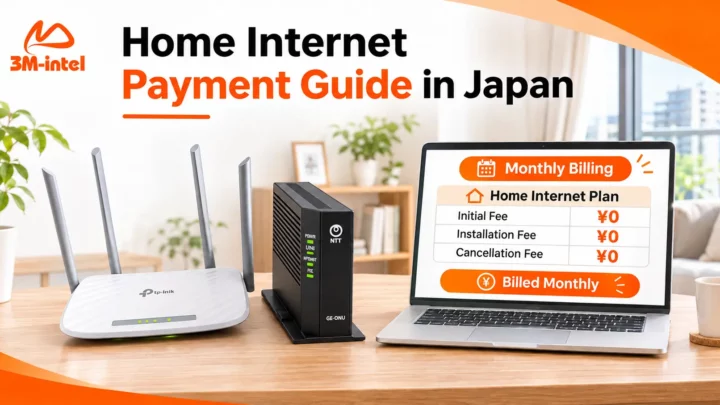
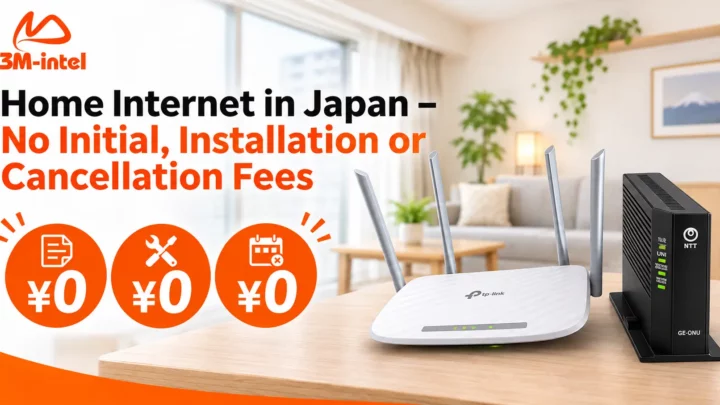
With its currently advertised Home WiFi policies, including no initial fee, no standard installation fee, and no cancellation fee, 3M INTEL aims to make home internet services more accessible through clear registration procedures and understandable service conditions.
So, what is fixed WiFi, what types of housing in Japan can support it, and what should you check before installation?
1. What Is Fixed WiFi in Japan?
Fixed WiFi generally refers to internet connectivity provided at a fixed address, such as an apartment, detached house, or office.
With fiber-optic internet services, an internet line connects to network equipment at the residence. A WiFi router then distributes the connection wirelessly to nearby devices.
Users can connect:
- Smartphones and tablets.
- Laptops and desktop computers.
- Smart TVs.
- Gaming consoles.
- Security cameras and smart home devices.
How Does Fixed WiFi Work?
A fiber-optic home internet connection typically involves three basic components.
Internet Line: A fiber-optic cable delivers connectivity through the network infrastructure to the residence, depending on the technical conditions at the address.
Optical Network Unit (ONU): An ONU or equivalent network terminal receives the signal from the internet line and provides a network connection inside the home.
WiFi Router: The router creates a wireless network that smartphones, laptops, and other devices can join.
Depending on the configuration, the ONU and WiFi router may be separate devices or integrated into one unit.
It is important to understand that WiFi is simply the wireless connection method within the home. Overall internet quality also depends on the internet line, equipment, network configuration, and actual usage conditions.
What Infrastructure Does 3M INTEL Fixed WiFi Use?
According to its official service information, 3M INTEL provides Fixed WiFi and fiber-optic internet solutions using NTT Hikari infrastructure in Japan.
The service is intended for customers who need long-term home internet access, especially households with multiple connected devices, online learners, and remote workers.
However, not every address is automatically eligible for installation. 3M INTEL must first check the available infrastructure and installation conditions at the customer’s residence.
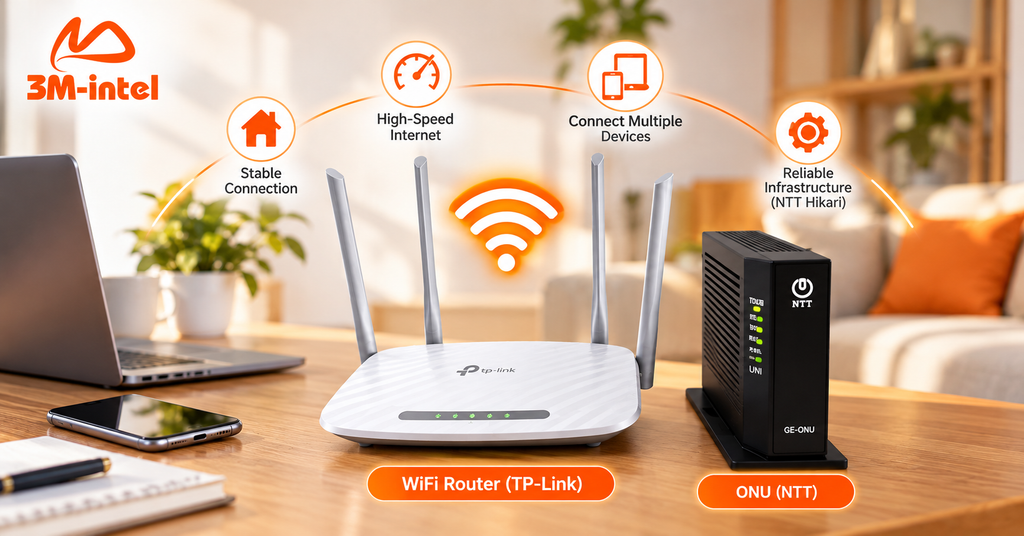
Fixed home internet using a TP-Link router and NTT ONU supports WiFi connectivity for multiple devices in Japanese households.
2. Who Should Use Fixed WiFi While Living in Japan?
Fixed WiFi is particularly worth considering when internet access is an essential part of everyday life and work rather than something needed mainly while traveling.
2.1. Long-Term Residents in Japan
If you plan to stay in Japan for an extended period and regularly use the internet at one address, a fixed-line connection may be more convenient than relying exclusively on mobile internet.
You can use the connection for communicating with family, watching videos, managing work, and accessing online services.
However, before registering, you should check the service transfer and cancellation conditions if you may move to another residence in the future.
2.2. Families With Multiple Internet Users
A household may have several devices connected at the same time: parents using smartphones, children attending online classes on laptops, and a Smart TV streaming entertainment content.
For regular internet usage at one address, a fixed-line connection is worth considering.
However, connection quality when several people are online simultaneously still depends on the internet plan, router, and WiFi network within the home.
2.3. People Working From Home in Japan
For remote workers, internet access may be an essential tool for daily professional activities.
Tasks such as video meetings, document sharing, cloud synchronization, and online collaboration require a connection suitable for the workload.
Fiber-optic home internet can support these activities when the available infrastructure and service plan meet the customer’s needs.
If your work requires continuous connectivity, you should also consider a backup connection in case of unexpected network interruptions.
2.4. International Students Living in Apartments Long-Term
International students renting an apartment or sharing accommodation with friends may consider fixed WiFi if they regularly attend online classes, use laptops, and share internet access at home.
Before registering, check whether internet service is already included in the rent.
If the apartment already provides an internet connection, you may not need to register for an additional line.
2.5. People Who Frequently Stream Videos, Play Games, or Use Multiple Devices
When most online entertainment takes place at home, fixed-line internet is a practical option to consider.
However, gaming performance, latency, and video streaming quality do not depend solely on the provider’s name or advertised maximum speeds.
Router placement, WiFi coverage, wired LAN connections, and the number of simultaneous users can all affect actual performance.
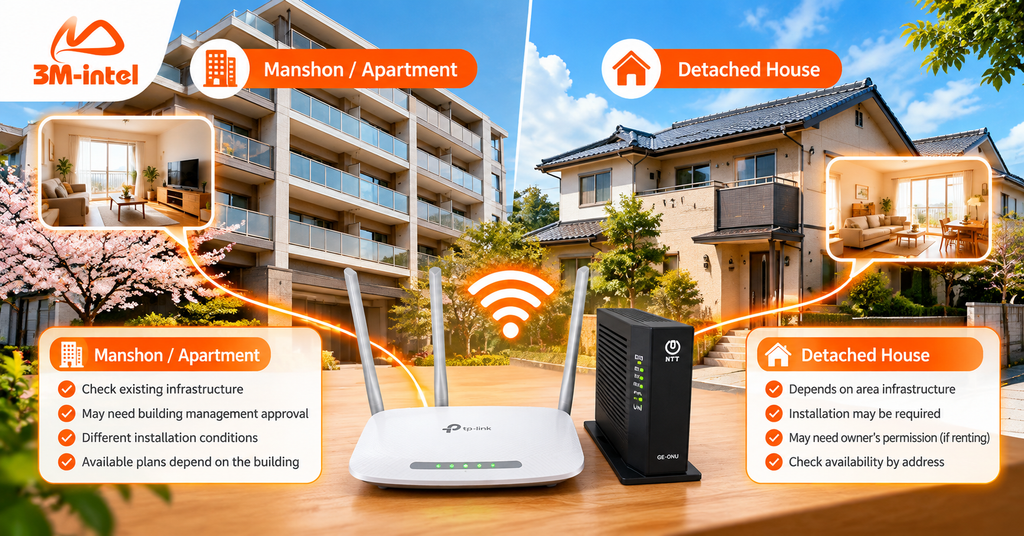
Fixed WiFi installation conditions in Japan vary between Mansion apartments and detached houses, depending on network infrastructure and the registered address.
3. How Does Internet Installation Differ Between Mansions and Detached Houses in Japan?
This is an important consideration because internet infrastructure can vary considerably between apartment buildings, mansions, and detached houses.
Internet in Mansions and Apartments
In Japan, a mansion generally refers to a residential apartment or condominium building.
Some buildings already have internet infrastructure installed, while others may not have the systems needed for the service the customer wants.
Residents commonly encounter three situations.
Situation 1: Internet Is Included in the Rent
You may be able to use the building’s existing service, but you should check whether a WiFi router is provided or whether only a wired LAN port is available.
Situation 2: The Building Has Existing Infrastructure but Requires Separate Registration
Activation may be more straightforward, depending on the available infrastructure and the supported connection type.
Situation 3: Suitable Infrastructure Is Not Yet Available
Customers must check installation feasibility, construction requirements, and approval from the building management before registering.
Internet in Detached Houses
For detached houses, installation feasibility generally depends on the local fiber-optic infrastructure, how the connection can enter the property, and the actual construction conditions.
If you rent the house, you may still need the property owner’s permission before carrying out work that could affect the building.
Comparing Installation Conditions
| Criteria | Mansion / Apartment | Detached House |
| Existing Infrastructure | Depends on the building’s available systems | Depends on local infrastructure and the connection route |
| Address Availability Check | Required | Required |
| Construction Approval | May require building management or owner approval | May be required for rented houses |
| Cable Installation | Depends on building structure and shared systems | Based on the property’s technical conditions |
| Installation Time | Depends on infrastructure and technician availability | Depends on infrastructure and technician availability |
| Available Plans | Must be checked for the building | Must be checked for the address |
Important: Living in a mansion does not automatically mean that a dedicated apartment internet plan is available. Likewise, not every detached house requires new construction work.
An address-based availability check is necessary to confirm which services can actually be installed.
4. Why Choose Fixed WiFi Instead of Pocket WiFi for Home Internet?
Both fixed WiFi and Pocket WiFi can provide internet access to multiple devices, but they are designed for different usage situations.
| Criteria | Fixed WiFi | Pocket WiFi |
| Main Usage Location | At the registered residential address | Portable between locations |
| Connection Technology | Fiber-optic infrastructure for 3M INTEL Fixed WiFi | Mobile network |
| Can Be Taken Outside | No | Yes |
| Home Installation | May be required | Not required |
| Long-Term Home Usage | Well suited | Depends on needs |
| Multiple Devices | Yes, depending on router and plan | Yes, depending on device model and plan |
| Working or Studying at Home | Worth considering | May be suitable depending on usage |
| Internet Immediately After Moving | Requires installation arrangements | Generally more flexible |
If most of your internet usage takes place at home, fixed WiFi may be a more suitable option.
On the other hand, if you frequently travel, have not settled at a permanent address, or need internet access while waiting for installation, Pocket WiFi may be more convenient.
3M INTEL offers both solutions, allowing customers to explore connectivity options based on their living arrangements and everyday internet habits.
5. What Are 3M INTEL’s Fixed WiFi Policies?
When choosing home internet in Japan, customers should consider not only connectivity and speed but also initial charges, contract conditions, and potential costs when ending the service.
According to 3M INTEL’s published Home WiFi policies, the main features include the following.
No Initial Fee
3M INTEL currently advertises its Home WiFi service with no initial registration fee.
This allows customers to evaluate the cost of starting the service without adding a standard initial setup charge.
No Installation Fee
3M INTEL advertises a no-installation-fee policy for Home WiFi.
However, actual installation conditions must still be checked by address. Customers should confirm which work is covered by this policy and whether any special construction requirements fall outside the standard installation scope.
No Cancellation Fee
According to its currently published policy, Home WiFi does not carry a cancellation fee.
However, customers should still confirm the final billing date, any outstanding payments, equipment policies, and service termination procedures.
No cancellation fee does not necessarily mean all remaining financial or equipment-related obligations are waived.
Monthly Billing
After the connection has been activated, customers pay for their internet service according to a monthly billing cycle.
Specific monthly charges depend on the confirmed service plan, address eligibility, and applicable conditions.
Home WiFi Policy Summary
| Item | Advertised Home WiFi Policy |
| Network Infrastructure | NTT Hikari |
| Initial Registration Fee | No initial fee |
| Installation Fee | No installation fee, subject to service conditions |
| Cancellation Fee | No cancellation fee under the advertised policy |
| Billing Method | Monthly |
| Address Check | Required before confirming installation |
| Estimated Installation Time | Approximately 2–3 weeks |
| Monthly Price | Confirmed according to the plan and address |
To avoid misunderstandings, customers should verify the exact applicable policies and service conditions with 3M INTEL when registering.
6. How to Register and Install Fixed WiFi With 3M INTEL
The Home WiFi registration process covers several stages, from checking the property details to arranging installation and activating the connection.
Step 1: Provide Your Registration Information
Customers should prepare:
- Full name.
- Contact information.
- Installation address in Japan.
- Housing type: mansion, apartment, or detached house.
- Expected service period.
- Internet needs and number of connected devices.
The address should include the postal code, building name, and apartment or room number if applicable, so that installation eligibility can be checked more accurately.
Step 2: 3M INTEL Checks Service Availability
After receiving the information, 3M INTEL checks the available network infrastructure and conditions at the registered address.
The assessment may include:
- Existing internet infrastructure.
- Fiber-optic service availability.
- Building or detached-house conditions.
- Relevant construction requirements.
If the address is eligible, customers receive further guidance on available services and registration conditions.
Step 3: Confirm the Internet Plan and Charges
3M INTEL confirms the proposed internet service, monthly charges, required equipment, fee policies, and relevant conditions.
Customers should review all details before agreeing to registration, particularly the terms governing free installation and cancel